
Eiffel Emergency... The AF 8969 Story
- Arya Shinde
- Nov 19, 2023
- 19 min read

Introduction :
24th December 1994, 224 Passengers & 12 Crew aboard Air France 8969 were anticipating returning to France to celebrate Christmas with their families & friends. Instead, they got involved in a hijacking with a plan that would stun the French Nation, People & the World.
Background - Algerian Civil War :
The World was a different place when the hijacking took place, The Berlin Wall was still in pieces, the World Trade Center Twin Towers stood tall & Terrorism was yet to reach many shores worldwide.

In the 90s, As Europe was reunifying from the differences of the decades of the Cold War, Algeria was in a state of civil war with the Government of Algeria & rebellious Islamist organizations primarily the Armed Islamic Group (GIA) & Islamic Salvation Front (FIS).
The GIA & FIS aimed to establish an Islamic State in Algeria based on Sharia Law & distance itself from the Western World especially France, Algeria's erstwhile Colonial Master. This was strikingly different from the Government of Algeria, the Constitutional Semi-Presidential Republic, which recently became a Free Market Economy.
The origins of the hijacking take us back to 1989 when Algeria was heading for its first elections after its independence in 1962, The ruling Nationalist Liberation Front (FLN) Government decided to conduct the first local & parliamentary elections in the country after lifting the ban on political parties.

One of the parties that rode high among the Algerians, especially among conservative sects of the society was Islamic Salvation Front (FIS). The FIS mostly consisted of conservative Algerians who fought the Soviet-Afghan War & returned to Algeria to establish an Islamic State.
The FIS was led by Abbassi Madani & Ali Benhadj. Both had a similar ideology that Algeria needed an Islamic State based on the principles of Sharia rather than being a Democracy & should distance itself from France & its values.
The FIS began as a populist organization with an ardent following in cities such as Algiers & Oran as well as in the rural provinces. The FIS arose into national attention during the Tipaza Earthquake, where its volunteers worked as doctors, nurses & rescue personnel, which helped it gain power in the elections.
In 1990, FIS won the local election with 54% of the total votes defeating the ruling FLN in many cities & towns. Once in power, The FIS started to establish the societal fabric based on its ideologies. Female Municipal Employees were asked to wear veils, and Video Parlours and liquor Stores were forced to close along with the segregation of Bathing Areas according to gender, which alarmed the elite & liberal population of Algeria.
Beginning of the Civil War :

Seeing the growing power of FIS at the local level, the ruling FLN seemed to be worried if the same would happen in the parliamentary elections. With the involvement of the West in the Gulf War in 1991, The FIS organized huge demonstrations in support of Saddam Hussein & Iraq, one of which ended in front of the Algerian Ministry of Defence led by Ali Benhadj.
Seeing this as a direct affront to the military hierarchy and cohesion, The Algerian Military became aggressive. The situation became worse as the Parliament approved a plan to realign districts that were strongly opposed by FIS, leading to riots across the country.
Due to the riots, The Government imposed a state of emergency with a suspension of constitutional rights, postponement of parliamentary elections & arrest of FIS Leaders Madani & Benhadj.
Due to the arrest of FIS Leaders, Their Supporters and sympathizers declared war against the Algerian Government, beginning the Algerian Civil War with the first step of banning the FIS in 1992.
Air France Comes Into The Picture :

Due to the Civil War, Commercial Jetliners flying to Algeria faced the possibility of missile attacks and the issue of NOTAM (Notice to Airmen). As a result, many commercial airlines had pulled out from Algiers with a few such as Air France continuing to provide limited services to Europe via their hub in Paris
Air France continued flights with the crew aboard who volunteered for the route. In 1994, The French Government had asked the recently privatized Air France, if it was necessary to continue operations in the war-ravaged nation but had not received a reply from the airline until the hijacking.
On the fateful day of 24th December 1994, Air France 8969 landed in Algiers with the following crew on board :

> Captain Bernard Delhemme
> Co-Pilot Jean-Paul Borderie
> Flight Engineer Alain Bossuet
> Flight Purser Gilles Dunis
> Flight Purser Christiane Adenot
> Flight Attendant Nicole Chauvin
> Flight Attendant Sylviane Bidault
> Flight Attendant Claude Burgniard
> Flight Attendant Christophe Morin
> Student Flight Attendant Anne Dufrène
> Student Flight Attendant Richard Cleret
> Student Flight Attendant Ludovic Ulmer
On board the aircraft, there were a total of 209 passengers of 9 different nationalities. The table is as follows :
Nationality | Passengers | Crew | Total |
|---|---|---|---|
Algeria | 100 | - | 100 |
France | 75 | 12 | 87 |
Germany | 10 | - | 10 |
Ireland | 05 | - | 05 |
Netherlands | 03 | - | 03 |
Norway | 05 | - | 05 |
United Kingdom | 05 | - | 05 |
United States | 05 | - | 05 |
Vietnam | 01 | - | 01 |
Total | 209 | 12 | 221 |

The aircraft involved in the hijacking was an Airbus A300, a medium-sized wide-body airliner manufactured by Airbus in the 1970s with Air France being the launch customer of the plane in 1974.
The aircraft was registered as F-GBEC with its maiden flight with Air France in 1980.
The Beginning with Disguise :
The Air France Flight had a short time turnaround time of 10-15 minutes with cleaning, refueling & boarding of passengers. Most of the passengers aboard the flight were local Algerians but there were a handful presence of French as well other nationalities as who were escaping the perils of life in Algeria during the Civil War

One of the passengers aboard the ill-fated flight was Zahida Kakachi, who would go on to co-author a book named "Le vol Alger-Marseille: Journal d'otages" with Flight Attendant Christophe Morin.
She worked as a Head Purser at the Algerian Flag Carrier Air Algerie & would normally fly with the former but when she reached the airport, all Air Algerie flights were booked up. She wanted to return but an Air France ticketing agent suggested she take the morning flight to Paris as she would be assured of taking off.
As the passenger boarding was completed, a group of men dressed as the Algerian Presidential Police boarded the plane as a final security check. Due to the situation, the crew & passengers were not suspicious of their presence.

The person who was leading the group (who would be the lead hijacker-terrorist Abdul Abdullah Yahia) entered the cockpit & spoke with Captain Delhemme regarding the check. As Yahia was in the cockpit, two other terrorists began to check the passengers' passports while one guarded the cockpit.
Flight Attendant Claude Burgniard remembers one of the guards was armed with C4 dynamite, which was unusual with the Algerian Police. The final security check & unauthorized delay to the flight also made the Algerian Military suspicious & they began to surround the plane along with the Algerian Special Intervention Group (GIS) also known as the Ninjas, which was noticed by Zahida Kakachi & other passengers.
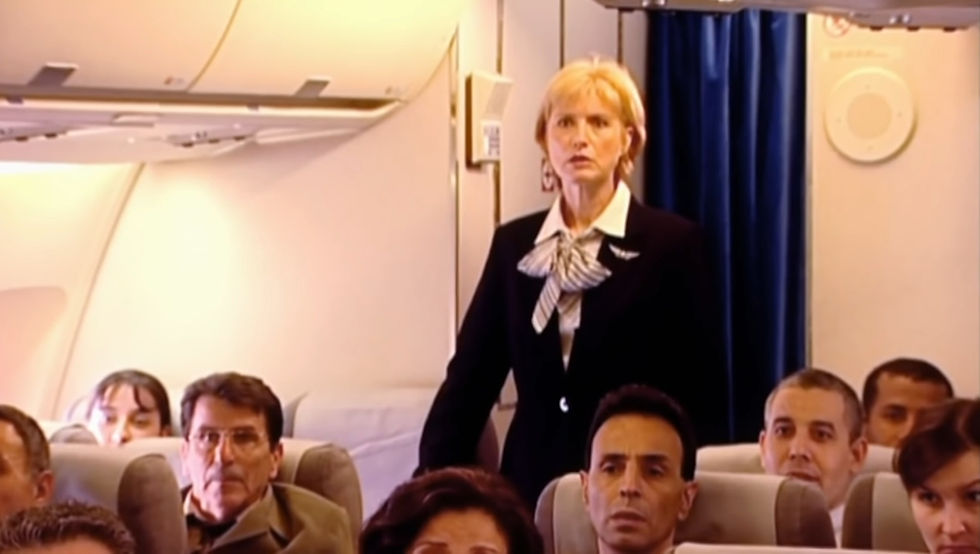
As the Ninjas approached, The passengers & crew realized that the men aboard were terrorists & not the police. As the men revealed their real identities, the passengers & crew realized that their flight is not going to be the same as they thought.
Negotiations, Sharia, Murder & Majorca: 24th December 1994

As the news of the hijacking spread, Reporters from Local and International News Channels began to gather at the boundary walls of the airport. Meanwhile, The Hijackers ask the crew in the cockpit to exchange coats to mislead any snipers.

Meanwhile, one of the terrorists manning the cockpit named Lofti was enraged with the scene in the passenger cabin. He was unhappy as the passengers were not following the Islamic Customs or "Sharia".
Acc. to. Claude Burgniard, Lotfi was enraged as the passengers were not following Islamic Customs such as women with their heads uncovered, men & women sitting next to each other & using the same lavatories.

Lotfi was asking the women to keep their heads covered. The women passengers & cabin crew complied with Lotfi's order by covering their heads with scarves & veils, the women who didn't carry a scarf or a veil used the aircraft blankets handed at boarding to cover themselves.
Meanwhile, in Paris, The Prime Minister of France Édouard Balladur is called back from his Christmas holiday in the resort town of Chamonix. Foreign Affairs Minister Alain Juppé & Interior Minister Charles Pasqua formed an emergency task force consisting of government officials of higher authority who were called back from their holidays.

Back in Algiers, The news had also reached the Algerian Government. For negotiating on behalf of the government, Algerian Interior Minister Abderrahmane Meziane Chérif stationed himself in the ATC Tower of the airport. When the minister came on the radio, lead hijacker Yahia began to yell, telling him that he & his fellow men are the Soldiers of Mercy & God had selected them to wage a war in his name.
Yahia threatened the authorities that if the plane didn't take off for Paris they would blow up the plane with everyone in it. Although he had dropped the demand for FIS leaders' release, he was adamant about their demand to fly to Paris. Their Paris Demand was being continuously put on hold by the Algerian authorities & soon the hijackers will startle the authorities...
The First 2 Victims, Nightfall & Majorca :

The hijackers found out that an Algerian Police Officer was on board during the passport check of the passengers. To force the Algerian Government to comply with their demands the hijackers approached the police officer and told him to follow them.
Zahida Kakachi remembers that the police officer, who sat two rows behind her, was hesitant as he did not know what the hijackers were going to do. Other passengers recalled that he was pleading to spare him as he had a wife & a child. After taking the officer towards the door, the hijackers shot him down the boarding stairs.

The passengers were in an utter state of shock & disbelief with the cockpit crew unaware of the killing of the officer. Captain Delhemme recalls that his first contact with the cabin was when a flight attendant was allowed into the cockpit, to ask the cockpit crew for water & refreshments. Delhemme asked her to get a glass of water for him. At this point, the flight attendant whispered in his ear that a passenger has been killed by the hijackers
Despite the one causality onboard, the Algerian Authorities decided to continue to deal with the hijackers with a hardline stance. Claude Burgniard recalls that the hijackers were seething with rage & things were about to get wrong as they searched for the next target.

As they approached to select the next target, they selected a 48-year-old Vietnamese Diplomat named Bui Giang To. Burgniard referred to him as the "real foreigner on this plane". To didn't intimidate the hijackers as the attitude would upset the already raging hijackers.
The Vietnamese Diplomat thought that he was being released due to his foreigner & diplomat status but instead, he was shot by the hijackers at the same spot as the Algerian Police Officer. Captain Delhemme recalls that when the same flight attendant entered the cockpit with refreshments whispered to him again that the casualties had gone up to 2 from 1.
Delhemme realized that the situation was getting worse & if the same situation continued it would be a bloodbath on board.

Meanwhile, on board the aircraft Flight Attendant Christopher Morin remembers the hijacker who had killed the Algerian Police Officer & Vietnamese Diplomat (tagged by the crew as the "Killer") and kissed him behind on the forehead whenever he passed through the galley. When a few Algerian Passengers noticed this, they told Morin that this may be the kiss of death.
When they again met in the galley of the aircraft, Morin approached him and told him that he did not want to die with a bullet in his head but the Killer told him if he was destined to die then he would die as a martyr & will be destined for heaven.
Meanwhile, back in Paris, The French Government wanted to send its troops to Algeria as they believed their troops would be more capable of ending the crisis but Algerians outrightly refused French troops on their land to solve an internal political problem.
French Prime Minister Édouard Balladur in a forceful & urgent way asked his Algerian Counterpart to allow the aircraft to take off as he believed it was his government's responsibility to rescue the aircraft & his citizens on board.

The French also had a backup plan with the help of Spain. They planned to send the special forces Groupe d'Intervention de la Gendarmerie Nationale (GIGN) to the Spanish Isle of Majorca under the leadership of Colonel Denis Favier, the then-head of GIGN as it was closer to Algeria without any interference
The GIGN planned to board an Airbus A300 (an aircraft similar to the one being hijacked) to study the hijacked aircraft. As the French Troops arrived in Majorca, the news of their arrival reached Algeria, which did not welcome their arrival near their coast.

The Cockpit Crew especially Captain Delhemme were trying to gain Yahya's trust as they believed if they gained his trust, they would know the intentions of the hijackers & would act accordingly in the future. Captain Delhemme began to explain the workings of the Airbus A300 and its control system of the aircraft which pleases Yahya & Captain Delhemme is relieved that his plan is working.
Mother, Murder, Mole & Marsailles: 25th December 1994
At 2 am, Captain Delhemme made a small tour of the cabin. He noticed that the two hijackers who were manning the cabin were sleeping as well and the passengers were also tired after a long hostage situation. He noticed that the two hijackers were sleeping in the galley and believed if any planned assault by the Algerian Ninjas took place,, it would be less fatal.

After a restless night, Passengers woke up on the morning of 25th December 1994 - Christmas. Claude Burgniard remembers that a middle-aged male passenger distributed glasses of sparkling water to passengers & the cabin crew. The crewmembers remember calling him "Father Christmas" as he said to one of them that they had worked so hard & it was his part of returning the gesture.
Burgniard remembers that the passengers were trying to act normal but all they had to was wait & watch for the situation. At noon, the hijackers decided to release Algerian passengers on board, especially women, children & those with severe health risks but the Algerians refused to leave the aircraft as they believed that the hijackers would torture or kill the French passengers & crew on board.
Meanwhile, both the French & Algerian governments received information through a mole (an intelligence officer ) in the GIGN via the French Consulate in Oran that the plane would be used as a weapon to crash into a French Landmark, which stunned both governments.

The Algerian Government tried to incite the lead hijacker Yahya by bringing his mother to speak with him through ATC Radio. She pleaded to her son to surrender himself to the authorities, but he yelled back that he was dedicated to the Islamic Cause & was enraged that the government dragged his mother into this. Captain Delhemme saw the raging emotions & was sure that he would not hesitate to kill his third & next target who would be a French National.

As Yahya spoke to Lotfi about the Algerian Government's trick, Zahida Kakachi overheard their conversation about the no.of. French passengers aboard & planned to kill them. The hijackers later took a French National named Yannick Beugnet who worked at the French Embassy in Algiers and brought him to the cockpit, & warned the ATC Officers on the radio that if the Algerian Government didn't allow the plane to take off for Paris then they will initiate a blood bath by killing everyone on board starting Beugnet & threatened to throw him out of the plane. They also forced Beugnet to plead into the microphone. Still, the Algerian Government maintained its hardline stance of stalling the aircraft which inevitably forced the hijackers to kill their third victim.
Zahida Kakachi remembers the hijackers taking Beugnet towards the door & saw the fear in his eyes. The hijackers instructed her to go back into the economy class section with the other passengers. As the other passengers saw Kakachi coming back from the business class section in a sad state, the moment she sat on her seat, the passengers heard gunshots confirming that Beugnet had been killed.

Beugnet's killing had been confirmed by the cockpit crew when they saw a signal of the door opening. Seeing the situation getting out of hand, Captain Delhemme in a fit of rage yelled at the ATC Officers on the radio. He said that this is what you get (death of 3 passengers) when you act tough & begged them to permit the aircraft to leave Algiers for Paris to avoid any further casualties on board.
Meanwhile, the news of Beugnet's murder had reached the French Government. Hearing this, French Prime Minister Ballandur immediately called his Algerian counterpart Mokdad Sifi informing him that the Algerian Government would be held responsible for the outcome if it did not authorize France to intervene in the situation.

Just before midnight, French Prime Minister Ballandur told Algerian President Liamine Zeroual that France was ready to receive the aircraft. As a result of Prime Minister Ballandur's demands, Air France 8969 was ready to leave Algiers 39 hours after the beginning of the hijacking.
Marsailles : 26th December 1994
After the takeoff from the GIGN & Air France, 8969 Crew got into action, with the GIGN getting a lead from Majorca to Marseilles with the intelligence lead from Oran & prepped up the Marseille Provence International Airport for the hijacked aircraft.

Meanwhile, the hijackers aboard AF 8969 were excited which was seen by both passengers & crew. During the mid-air journey between Algiers & Marseilles, Captain Delhemme and lead Hijacker Yahya had a brief conversation, where Delhemme asked Yahya whether the hijackers had planned to blow up the aircraft mid-air as the responsibility of the passengers was on the former's hands but he was assured by the latter that they will go as per the plan: refuel at Marseilles & head to Paris for the press conference.
As they landed in Marseilles, Claude Burgniard recalls how the hijackers were happy that they were in France & they were close to the completion of their mission. The plane was then taken to a remote stand away from the main terminal & the ATC Tower which was a part of Colonel Favier's strategy.
Meanwhile, the intelligence received from Oran had confirmed that the terrorists intended to use the plane to carry out an attack on Paris & the French Government decided to not let the aircraft take off for Paris at any cost with Colonel Favier's tactics to wear out the terrorists physically as well as prolong the negotiations as long as possible

Meanwhile the next morning, Colonel Favier began to play his tactics with the Marseilles Police Department, Air France Security & ATC Workers with the Chief of Marseilles Police - Alain Gehain talking on the mic with the aircraft
While speaking on the microphone, the hijackers demanded to refuel the aircraft to 27 tonnes - triple the regular 9 tonnes of fuel required to fly between Marseilles & Paris. This confirmed the intelligence report received earlier that the plane would be used as a firebomb to attack Paris.

At 8:00 AM, the hijackers demanded that the aircraft should be permitted to take at 9:40 AM but the negotiators delayed the ultimatum under the pretext of providing additional food & water, emptying the toilet tanks & cleaning the aircraft. The cleaning staff aboard the aircraft were GIGN men disguised as cleaning staff. They planted long-range "cannon" microphones. The negotiators asked the hijackers to hold a press conference in Marseilles rather than Paris as the major media outlets such as FranceInfo, BBC, and CNN had their reporters at the airport waiting to get a scoop on the hijackers, which they agreed to take to it aboard the A300.

The negotiators requested the hijackers to clear the front business-class cabin for the press conference which would create an area for the GIGN troopers during the storming of the aircraft. The cabin crew began to clean & clear the business class area for the press conference while looking out of the window for the press reporters or even GIGN forces. The hijackers did not realize that the doors of the aircraft could be opened from the inside. The GIGN waited until sunset to carry forward the storming of the aircraft.

After 12 hours had elapsed since their arrival in Marseilles, The GIGN had successfully identified the position of the hijackers mainly in the cockpit. Meanwhile, with the absence of the press, Yahya sensed something was fishy & was clearly enraged. He ordered Captain Delhemme to park the aircraft at the base of the ATC Tower near the other terminal as if the terrorists planned an explosion, the casualties would be higher. Delhemme complied with the hijacker's request.

As the aircraft changed its location, GIGN reorganized its forces with Captain Favier placing snipers on the roof to have a view of the cockpit. He organized a group of thirty GIGN troopers with three passenger boarding stairs to rush the aircraft and take it over. Favier planned to have two teams, each with 11 people, open the rear left and rear right doors of the A300. A third team of eight would open the front right door. The forces planned to isolate the cockpit, with Yahia, from the rest of the aircraft.

At 5:00 PM, An enraged Yahya entered the passenger cabin to kill his 4th victim - the youngest Air France crew member - who had told him that he was an atheist. Yahya was hesitant to kill him but kept delaying the execution. At the same time, the hijackers started firing around the aircraft through the cockpit window & the aircraft door. Zahida Kakachi recalls that the hijackers began reciting the verses from the Holy Quran on the Public Address System as prayers for the dead. The passengers were dead silent & began to feel panicked unknown what was waiting for them. As the hijackers began firing toward the ATC Tower, Favier decided it was time to raid the aircraft
26th December 1994: GIGN Raid

Once the hijackers noticed the boarding stairs moving towards them, they recognized the imminent assault. Through the cockpit window, a hijacker fired upon the stairs containing the forward GIGN team. As the first stairs reached the front right door, it became apparent that it was elevated too high relative to the door frame for a uniform entry into the aircraft. The GIGN had trained on an empty aircraft, in which the suspension system of the plane was not as compressed, leading to an overestimation of the necessary height of the boarding stairs.

After a short delay in repositioning the stairs, GIGN forces were able to enter. The hijackers returned fire, attacking the GIGN forces. One hijacker was killed instantly. Then, the two other units entered the rear of the aircraft. The participants fired hundreds of bullets.
The hijackers fired through the skin of the aircraft. Grenades erupted and smoke went through the cabin. The GIGN's concussion grenades temporarily blinded and deafened occupants, allowing the GIGN to storm the aircraft. One of the hijackers' homemade grenades detonated, causing limited damage.

The snipers on the tower could not initially get a clear shot into the aircraft as the copilot, Jean-Paul Borderie, blocked their view. Moments later, Borderie pulled himself out of the cockpit window and dropped to the ground on the hard concrete sustaining injuries while running towards the terminal. With the view unobstructed, the snipers began firing into the cockpit, while the GIGN evacuated passengers in the rear of the aircraft through the slides.

Flight Christopher Morin recalls that the GIGN ordered the passengers & the crew to get down on the floor with their hands on their heads describing the situation as "violent", putting on his overcoat to protect himself and a fellow female passenger who was terrified. Meanwhile, in the cockpit, Captain Delhemme, Flight Engineer Bousset, and a sole terrorist were in a tense situation as Yahya and Lotfi had been shot by the GIGN Snipers. Delhemme & Bousset were worried that the sole terrorist would kill them but he did not according to GIGN Head Colonel Favier believes that it was the mutual respect between the cockpit crew, cabin crew, passengers, and the terrorists that had been developed in the last 54 hours which aided in the survival of the passengers and crew on board.

The last surviving terrorist is shot by the GIGN 20 minutes after the assault as he runs out of ammunition. Captain Delhemme & Flight Engineer Bousset remain in the cockpit. The GIGN operatives believe that since the fight around the cockpit was intense, there is no chance of anyone surviving in the cockpit. When the GIGN Operatives enter the cockpit, they mistook Flight Engineer Bousset as a suspected terrorist and he is handcuffed. Captain Delhemme also walks out of the cockpit.

As the GIGN Operatives brought in a handcuffed Bousset & Delhemme to the terminal, Claude Burgniard & other crew members pleaded with the GIGN operatives to remove his handcuffs as he was the aircraft's Flight Engineer. She remembers Bousset's shirt was blood-stained and him yelling that he was deaf but Bugniard assured that he was alive.

At 5:35 PM, Colonel Favier declared that the incident was over. All of the hijackers had been killed. The remaining passengers and crew survived the 20-minute gun battle. Of the remaining passengers, 13 received minor injuries. 9 of the 30 GIGN operatives received injuries; of them, one received serious wounds. Three crew members received injuries. Captain Delhemme was hit by bullets in his right elbow and thigh. Bossuet received minor injuries as the dead bodies of two hijackers had shielded Captain Delhemme and Flight Engineer Bossuet from gunfire. Co-pilot Borderie, the most seriously injured, fractured his elbow and thigh from the 5-metre (16 ft) drop. Favier said that he determined that the operation was a success since none of the GIGN received fatal injuries. French Prime Minister Édouard Balladur said that the events unfolded "exceptionally well".
Aftermath
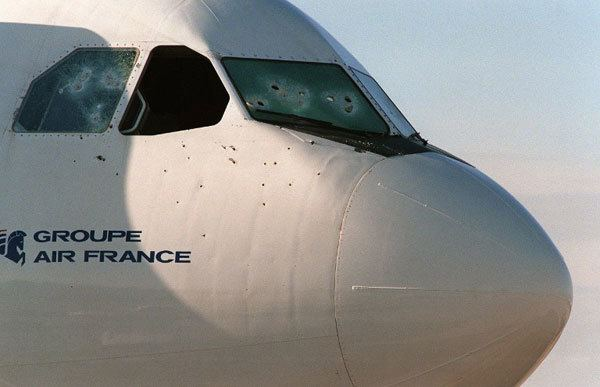
The Airbus A300, damaged beyond repair, met its final fate in September 1995, scrapped at the Marseilles Airport
As the incident involving Air France Flight 8969 reached its conclusion, the repercussions extended far beyond the tarmac. The Armed Islamic Group, (GIA) claiming responsibility for the event, unleashed a horrifying act of retaliation in Tizi-Ouzou, Algeria. Four Roman Catholic priests, three French and one Belgian, fell victim to the group's violence, adding another layer of tragedy to an already dire situation.

Amidst the chaos, recognition, and honors were bestowed upon the crew of the ill-fated A300 and the GIGN forces. Charles Pasqua, then Minister of the Interior, commended their valor, noting that the crew had risen to the occasion throughout the ordeal. The acknowledgment of their courage came in the form of high national honors, a testament to the resilience displayed in the face of adversity.
The fate was different for the crew members. Captain Delhemme, chose to return to the skies, contributing nine more years of service to Air France before retiring in 2003.
Flight attendant Claude Burgniard, haunted by the faces of the three passengers executed during the ordeal, found solace in the realization that her actions had saved 173 lives. Despite receiving a medal and a message of thanks from the airline, she made the poignant decision never to return to Air France. The medal, a symbol of her heroism, remains unworn, a personal choice reflecting the complex emotions surrounding that fateful day.
Flight attendant, Christophe Morin, took a different path, redirecting his career towards charitable endeavors. His choice exemplified the diverse ways individuals cope with the trauma of such life-altering experiences.

One of the passengers, Zahida Kakachi along with her brother immigrated to France as she feared for her family's safety in Algeria. She now works for a charitable organization along with Christopher Morin. Both of them Co-authored a book on the hijacking in French titled "Le vol Alger-Marseille: Journal d'otages," (The Algiers-Marseille flight: The Hostage Diary) recalling the events of the attack and how it had affected their lives.
A chilling revelation came to light when a former militant group leader admitted to a sinister plan: the intent to detonate the aircraft over the iconic Eiffel Tower. Although the group never attempted this plot again, the gravity of such a potential act was underscored by Pasqua. He suggested that, in the eyes of the militants, crashing an aircraft into the Eiffel Tower or the Élysée Palace would be considered an "extraordinary feat." If considered successful, the incident would have a predecessor to 9/11.
The incident prompted operational changes in Air France's flights between Algiers and Paris. Renumbered as Flights 1355, 1451, 1555, 1755, and 1855, these flights now operate to Paris Charles de Gaulle Airport instead of Paris Orly Airport
.
Notably, Flight number 8969 found new significance as a codeshare flight number for the American Airline Delta Air Lines for its flight 1584, connecting Greater Rochester International Airport and Hartsfield–Jackson Atlanta International Airport.
Conclusion
In the harrowing events of Air France Flight 8969's hijacking on December 24, 1994, passengers and crew faced terror as the GIA sought to use the aircraft as a weapon of mass destruction. The courage of the crew and the intervention of the GIGN averted a potential catastrophe.
The aftermath saw recognition for the heroes, but scars lingered, prompting diverse paths for survivors. The chilling revelation of a plan to crash the aircraft into the Eiffel Tower underscored the gravity of the situation. Operational changes followed, reshaping Air France's Algiers-Paris flights, and Flight 8969's legacy continues through a Delta codeshare.
Bibiliography
The content of the following blog couldn't be done without the help of the following resources & reports :
- The Smithsonian Channel
- The Wonder Channel
- Air France Archives
Credit for the Images to their respective owners in respect with Copyright & Fair Use Policy

Comments