
Twin Tragedy... Why WTC had more causalities
- Arya Shinde
- Jul 25, 2021
- 19 min read

Updated: Sep 6, 2021

Introduction
11th September 2001... A sunny Tuesday was turned into a day that changed the course of the century. When 4 civilian aircraft departing from various airports on the East Coast bound for their daily Trans-Continental Service to California were hijacked by terrorists & deliberately crashed into America's iconic landmarks.
The group of 19 terrorists hijacked 4 aircraft. The details are as follows :
1. American Airlines Flight 11

Service: Boston - Los Angeles
Plane: Boeing 767-200ER
Passengers: 76
Crew: 11
Hijackers: 5
Target: World Trade Center North Tower, New York City
Result: Crashed into the WTC North Tower between floors 93 & 99
2. United Airlines Flight 175

Service: Boston - Los Angeles
Plane: Boeing 767-200ER
Passengers: 56
Crew: 9
Hijackers: 5
Target: World Trade Center South Tower, New York City
Result: Crashed into the WTC South Tower between floors 77 & 85
3. American Airlines Flight 77

Service: Washington - Los Angeles
Plane: Boeing 757-200
Passengers: 53
Crew: 6
Hijackers: 5
Target: The Pentagon, Arlington (outside Washington DC )
Result: Crashed into the Navy Annex Wing of the Pentagon
4. United Airlines Flight 93

Service: Newark - San Francisco
Plane: Boeing 757-200
Passengers: 33
Crew: 7
Hijackers: 4
Intended Target: The Capitol or The White House
Result: Crashed into a field in Somerset County, Pennsylvania after a revolt between the passengers & hijackers
Background & Planning of 9/11
For those who don't know about the background of the attack, the origins have a complex history but the plan was hatched by a notorious terrorist organization with its leader being the mastermind, who would go on to become the world's most wanted terrorist
The original plan was to hijack 12 civilian airliners operated by suicidal operatives crashing them into the following American Landmarks :

World Trade Centre, New York City ( Ultimate Target for AA 11 & UA 175 )

Empire State Building, New York City

The Pentagon, Arlington, Virginia ( Ultimate Target for AA 77 )

Prudential Tower, Boston

White House, Washington DC ( Intended Target for UA 93 )

United States Capitol, Washington DC ( Intended Target for UA 93 )

Sears / Willis Tower, Chicago

US Bank / Library Tower, Los Angeles

Transamerica Pyramid, San Francisco

Columbia Centre, Seattle
Out of these targets, only World Trade Centre & The Pentagon were struck by terrorists. Only 3 out of 4 hijacked airliners were successful in hitting their targets ( AA 11, UA 175 & AA 77 ) whereas 1 airliner ( UA 93 ) was not able to hit its intended target.
The original plan was dropped due to its ambitious scale by Bin Laden but he agreed to hit the WTC Twin Towers, The Pentagon, ( The White House, or The US Capitol ) as for him, these buildings symbolized the United States & its values.
The World Trade Center: An Icon of American Dream

The Dream of the World Trade Center was initiated in post World War for fulfilling the demands for office space built by a new bi-state developmental authority named as "Port Authority of New York & New Jersey" ( PANYNJ ) which would go on to manage the following infrastructure in both states
which hosted the evergrowing population of the New York Metropolitan Area
World Trade Center, New York City
TelePort Business Park, Staten Island
Bathgate Industrial Park, The Bronx
Elizabeth Industrial Park, Newark
Essex County Resource Recovery Facility, Newark
Newark Legal Center, Newark
Queens West Residential Project, Long Island City,
South Waterfront Residential Project, Hoboken.
Major Airports ( JFK, LaGuardia, Newark Liberty )
Minor Airports ( Stewart, Teterboro, Atlantic City )
Seaports ( Port Jersey, Brooklyn, Howland Hook, Port Newark - Elizabeth )
Bridges ( George Washington, Goethals, Bayonne, Outerbridge Crossing )
Road Tunnels ( Lincoln, Holland )
Rail Tunnels ( North, Hudson )
Road Transit ( Port Authority Bus Terminal, GWB Terminal, Journal Sqr Transit Centre )
Rail Transit ( PATH Transit - NJ - NYC, AirTrain JFK, AirTrain Newark )
The initial space planned for the WTC was in the Radio Row neighborhood in the Financial District - Tribeca in Lower Manhattan & Hoboken but the planned that the Lower Manhattan site would be great for boosting business in Lower Manhattan which was primarily than an industrial & warehousing district.
After getting approval of the plan in Lower Manhattan, the Port Authority began to vacate the Radio Row in 1965 providing the businesses compensation of $3,000 ( $24,588 in 2021 Dollar Value ) irrespective of the state of their business.
The Cost of the project borne by both the states of New York & New Jersey amounting to $335 Million ( $2.76 Billion in 2021 Dollar Value ) with an exemption of taxes instead of annual payments to the city by the New York City Council
Construction Begins & 1968 Building Code

The Construction of the WTC started in 1966 but the buildings were built according to the new 1968 Building Code, replacing the 1938 Building Code.
The Chief Architect was Minoru Yamasaki as the lead architect & Emery Roth & Sons as associate architects. Yamasaki's original idea was to build 80 storied twin towers but to fulfill the Port Authority's demand of 10,000,000 square feet of office space, the plan was tweaked to have 110 storied twin towers.
The design of the World Trade Centre was designed with narrow office windows reflecting the lead architect's fear of heights as well as making the tenants feel secure.

The 1938 Building Code was initiated primarily to keep stringent building laws especially in terms of fire safety in buildings primarily skyscrapers as New York was witnessing a skyscraper construction boom post-construction of the Empire State Building & Rockefeller Centre.
The 1938 Building Code according to the Port Authority did protect public safety & welfare but it didn't allow the efficiency & economy that the industry needs. They felt that the old code specified wasteful amounts of fire-proofing beyond the required safety.
The earlier 1938 code required building material to be fire-resistant masonry & building material but the new 1968 code required construction material that would be fire-resistant for up to 4 hours, (The WTC Twin Towers didn't sustain their fires for even 4 hours with the North Tower collapsing within 1 hour 42 minutes after Flight 11 slammed into it whereas the South Tower collapsing within 1 hour after Flight 175 slammed into it) due to the 1968 code also made fire-towers, which can be used to evacuate tenants in case of fire not mandatory as specified in the 1938 code.
Reduced Stairwells, Increased Elevators & Sky Lobbies
The 1968 code reduced the no. of. stairwells required in skyscrapers was decreased but the no. of. elevators or lifts were increased at the same time.

Despite being low on stairwells, The WTC had an extensive network of elevators totaling the no. of. elevators to 95.
One of the major limitations is that increasing building height required a higher no.of.elevators to service it, which required building space-consuming elevator banks (An Elevator Bank is used to simulate elevators moving people between different floors of a facility. )
To tackle the problem, Yamasaki and the engineers decided to use a new system with two "Sky Lobbies"— the floors where people could switch from a large-capacity express elevator to a local elevator that goes to each floor in a section. This system which was inspired by the local-express train operation used in New York City's subway system, allowed the design to stack local elevators within the same elevator shaft.
Located on the 44th and 78th floors of each tower, the sky lobbies enabled the elevators to be used efficiently. This increased the amount of usable space on each floor from 62 to 75 percent by reducing the number of elevator shafts.
The Stairwells that were designed by the WTC architects were only designed to accommodate 100 people throughout the building at a time but on the fateful day of 11th September 2001 they had to accommodate 12,000 tenants & counterflow of emergency service personnel who were on their way to assist injured & disabled tenants throughout the building at an hour cramping the stairwells at some floors with a width inch of the two stairwells being 44 inches whereas the third stairwell being 56 inches wide

In high-rise office buildings in the United States, 44 inches has been the minimum-required staircase width for several decades, based on the assumption that a person’s average shoulder width is 22 inches. So, with two people side by side, 44-inch-wide stairs became the required minimum width. However, it has been known for decades that 22 inches was narrower than the actual average shoulder dimension and yet building codes, including 1968 one, continued to use this inappropriate number
.
On 9/11, this mundane fact led to people having difficulty descending the stairs, particularly when they encountered disabled and slower-moving individuals. In some cases, evacuees actually left one stairwell and went to another staircase to more swiftly get out of the building. This situation was particularly apparent when individuals in wheelchairs struggled to get out, carried by groups of coworkers, strangers, and firefighters.
The narrow width caused challenges for firefighters too. Carrying well over 50 pounds of equipment while making the climb up the stairs meant they not only had to contend with exhaustion but also had to squeeze by the terrified occupants. The need to turn sideways to let each other pass meant that both groups, firefighters and occupants, were dramatically slowed.

In 1993, When the WTC was bombed by terrorists, the tenants in both towers had to face dark stairwells with the failure of emergency lighting & the air covered in black soot.
The tenants had a lot of hardships during the 1993 Evacuation. After 1993, The Port Authority had installed a more advanced emergency lighting system, exit signs that lit with light-emitting diodes that cost them $2.1 million ( $ 3.94 million in 2021 Dollar Value). The Emergency Lighting System installed post-1993 had batteries that would stay on at least 90 minutes after a power failure in the building but there was pitch darkness on the impact floors & the floors above the impact zone
Debates with Fire Department of New York ( FDNY ) & Fire Safety Matters
The 1968 Code had significantly reduced the fire safety requirements in skyscrapers & its outcome was that the tall skyscrapers were "softened" in the description of the Former FDNY Chief & Fire Safety Analyst Vincent Dunn. He also wrote in the Fire Engineering Magazine regarding the same matter
After Fighting High-rise fires in Midtown Manhattan, New York City for the past 10 years , it is my opinion that the FDNY has been lucky
- Vincent Dunn , Ex-FDNY Chief
Along with Chief O'Hagan, Dunn noted that the 1968 Code did not only change the fire safety but also the architecture of the city had also changed from heavy, dense masonry that defined the interiors of the old-style skyscrapers epitomized by the Empire State Building but now materials such as gypsum boards & spray-on will be used for fireproofing.

Moreover, the Port Authority's Fire Escape Protocol did not include a page for roof rescues as it was off-limits as this perspective was in mainstream throughout the emergency management circles in the cities in the United States with an exception of Los Angeles & Las Vegas who had procured a fleet of helicopters for aerial rescue & built helipads at landmark buildings.
According to experts in the field, aerial rescues were a viable option especially in cities with skyscrapers & high density, the criteria already being fulfilled by New York City. During the 1970s, there was a strong debate on the same topic, then FDNY Chief O'Hagan had argued that Central Evacuation Opportunities should be included in the blueprints of the building plans & permanently build them into the structure, rather than shifting this responsibility on the emergency service rescuers in the helicopters that might not be available in a crisis
Despite the aversion to the aerial resources, The Port Authority didn't explicitly tell the occupants of the WTC that the roof was never an option cause at the mandatory fire drills conducted every 6 months conducted by the PANYNJ, the Fire Safety Directors always emphasized the tenants to safely descend through the stairs

Just like the fire drills, the stairwell signage also didn't emphasize the way to the roof. Even if there had been, hundreds of tenants above the roof, which did work during the 1993 bombing but not in 2001 as the aerial support was not feasible due to dense smoke primarily due to the burning of jet fuel, leaving the tenants stuck in purgatory.
According to the 9/11 Commission, which was formed to bring into account every detail of the attack also stated :
Civilians at or above the impact zone in the North Tower had the smallest hope of survival.
Once the plane struck, they were prevented from descending because of damage to or impassable conditions in the building's three stairwells.
The only hope for those on the upper floors of the North Tower would have been a swift and extensive air rescue. Several factors made this impossible.
Doors leading to the roof were kept locked for security reasons, and damage to software in the security command station prevented a lock release order from taking effect.
Even if the doors had not been locked, structural and radiation hazards made the rooftops unsuitable staging areas for a large number of civilians; and even if conditions permitted general helicopter evacuations-which was not the case-only several people could be lifted at a time.
The WTC lacked any plan for evacuation of civilians on the upper floors of the WTC in the event that all stairwells were impassable below.
- Reports of the 9/11 Commission
The Commission also criticized the decision of the Port Authority to not evacuate the South Tower as soon as the North Tower was hit. It also stated that a firm & prompt evacuation order would have many to safety.
The People Stories from the North & South Towers

On the fateful day of September 11, 2001. The North Tower had to host one of the most important conferences of the year "The Riskwaters Conference" at the most prestigious restaurant in New York City namely Windows of the World located on the 106th & 107th Floors of the North Tower.
There were 376 guests at the restaurant with 72 staff present during the crash
The floors below the restaurant were occupied by the headquarters of a financial services firm named Cantor Fitzgerald.
The firm's headquarters were located on the 101st - 105th Floors lost most tenants (658 employees out of total 960) compared to any other tenant in WTC
The offices of Marsh & McLennan Companies, Inc were located on 93rd - 100th floors were destroyed as Flight 11 directly slammed into these floors, killing 295 employees & 63 contractors and those present in the stairwells & elevators passing through the impact zone.
The problem faced during the evacuation of the North Tower was that the 3 stairwells namely A, B, C did not run in continuous columns but they changed shafts via transfer hallways on the floors where mechanical equipment is present. ( in this case, such transfer hallway was located on the 76th floor of the North Tower )
The next hurdle was the availability of a single stairwell "C" as the stairwells "A" & "B" were destroyed due to the plane's impact. The stairwell "C" was clear up to only the 91st Floor. The stairwell above the 91st Floor was covered with debris & filled with smoke which made it impossible for the 1356 tenants above the 91st floor to evacuate.

In the South Tower, The situation was pretty different from the North Tower. Some tenants in the tower began to evacuate their offices but when the North Tower is hit but when an announcement by the Port Authority that the South Tower is secured, most of the tenants returned to their office, which proved fatal for many tenants as they were killed after Flight 175 crashed into the tower. Many tenants on the 105th Floor along with the window washer, Roko Camaj went upstairs to the roof as they felt that NYPD's Police Helicopters would rescue the people on the above floors as they did in 1993 but the dense smoke created by burning jet fuel that further created obstacles in the evacuating people from the rooftop which was further hampered as the door to the rooftop was locked & the keys were also not available with Camaj
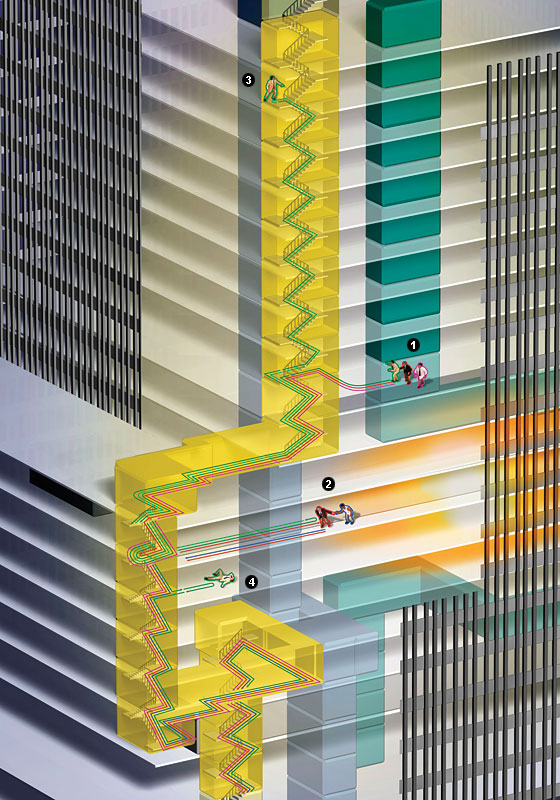
Meanwhile, A different story was coming to the scene in the impact zone & a few floors above it.
Unlike the North Tower, The Stairwells B & C in the South Tower did run parallel but Stairwell A ran in the northwest corner of the building.
When Flight 175 struck the tower at 77 & 85 floors, The trading floors of Euro Brokers on the 84th floor, Executive Vice President Brian Clark was barely a few meters away from the impact but survived.
After the impact, Clark & his other handful of colleagues such as Ron DiFrancesco, Bobby Coll, Kevin York, Micheal Stable, Brett Bailey & Dave Vera began to descend towards the lobby
On the 81st Floor, The Euro Brokers group met a woman & a man saying that the floors below 81 are covered with heavy smoke & debris. They said that we should go above the 81st Floor to the roof.

This led to an argument among the Euro Brokers group whether to go up or descend.
As Clark and DiFrancesco entered the floor, Clark turned around to observe his coworkers as they started to go up the stairs to the roof instead of down. That group would all lose their lives that day (except DiFrancesco), as access doors to the roof were locked, and there were no plans for helicopter rescues from the roof, as the New York Police Department (NYPD) deemed it too unsafe to attempt to rescue people due to dense clouds of smoke and rooftop antennas.
As Clark and DiFrancesco made their way to the voice screaming for help, DiFrancesco became overcome with smoke and returned to the stairs, which he would also ascend. Unlike the rest of his coworkers who went up the stairs, DiFrancesco reversed course and survived. Clark made his way to find Fuji Bank employee Stanley Praimnath, pinned underneath some debris behind a wall that had stood firm.
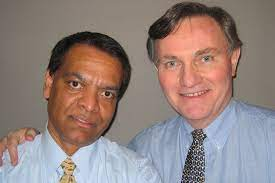
After Clark rescued Praimnath, the latter began to descend from the 81st Floor whereas DiFrancesco & others began to go upstairs with the women they met on the 81st Floor.
The women had problems with breathing due to the intense smoke that mainly due to the burning of jet fuel of the crashed jetliner

Seeing the women struggle, DiFrancesco offered his backpack to her as she could use it to filter the air. Besides DiFrancesco, Coll, York, Bailey, Stable, the man who had come upstairs with them were escorting the women. Meanwhile, Vera was talking to Jerry Banks, a colleague outside the towers through his walkie-talkie. They tried to open the doors, hoping that the office floors above the impact zone will have air fresher than what they were breathing, but all the stairwell doors seemed to be locked for the interests of safety as the 1968 Building Code required that every floor be unlocked reentry door. DiFrancesco could not open any of them.
During this chaos, The group met a few other people swelling the group from 8 to 15. Seeing the chaotic situation out of control, DiFrancesco decided to turn back & started his descent towards the stairs.

Meanwhile, The IT Manager at Euro Brokers, Richard Fern was in the elevator on the 85th Floor when the plane hit the tower.
Due to the plane's brutal impact, his body was thrown against the elevator but the elevator stopped on the 84th Floor & Fern exited the elevator & began his journey of 1,512 steps to the lobby via the dark Stairwell A
As Fern reached down a few flights of stairs, He saw a group of people standing near the transfer hallway on the 76th Floor, he saw the debris of the wallboard that had collapsed into the staircase & they couldn't get by. As the group began to turn back, Fern lifted the wall off the ground & rested it against the banister, creating a triangle that was just big enough to crawl under.

As they crossed this obstacle, on the 75th Floor, a smaller part of the wallboard had collapsed, but they jumped over the debris & continued their journey downwards. A few flights down, he caught up with Peter, another of his colleague who was talking to Jerry Banks regarding Dave Vera, who was with the other group from Euro Brokers higher up in the building.
After a brief talk, Peter & Fern went downstairs. When Fern reached the 30th Floor, his legs were shaking & thought that he would collapse but he kept going on along with Peter until they reached the lobby, where they met a phalanx of Port Authority Police Department (PAPD) & NYPD Officers who steered them out of the South Tower through the concourse exiting via the East towards Church Street near the Borders Bookstore
Meanwhile, Brain Clark along with Stanley Praimnath had reached the 68th Floor where they found light & fresh air. They also met the Euro Brokers Administrator Jose Marrero who had already herded a group of people downstairs off the 84th Floor towards the 44th Floor & was going upstairs to help Dave Vera on the insistence of Jerry Banks.
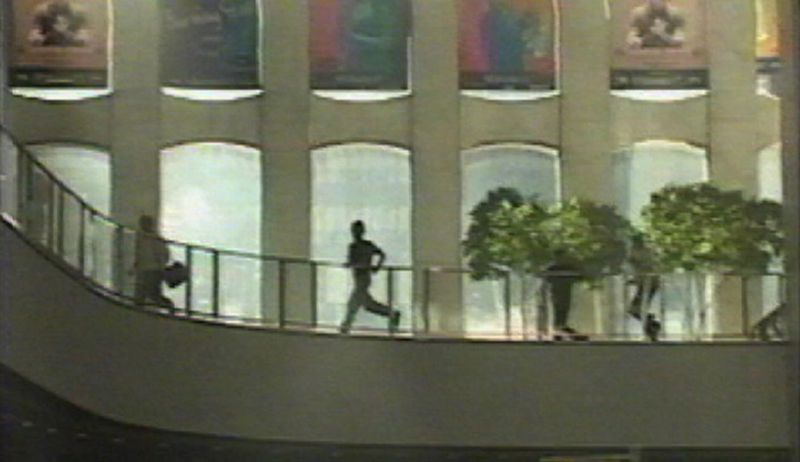
Clark asked Marrero to tag along with them so they both assist the injured Praimnath & told him that Vera is a strong person & can fend for himself but Marrero whose insistence had saved many of his colleagues' lives didn't turn back & assured Clark that he would be safe & rescue Vera & others stuck upstairs
As Clark & Praimnath reached the 44th Floor, They left the stairs for a break in the Lower Sky Lobby which fortunately had lighting but was deserted. The only person in the lobby was a security guard wearing a blue blazer of the WTC Staff along with an injured person with a massive head injury
The guard asked both gentlemen if they had cell phones but since both didn't have one, he told them that he wanted medical assistance for the injured man but the public phones in the SkyLobby were not working. The guard asked for a favor to call the medics for the injured man from both whenever they had access to phones & assured them that he will stay with the injured man.
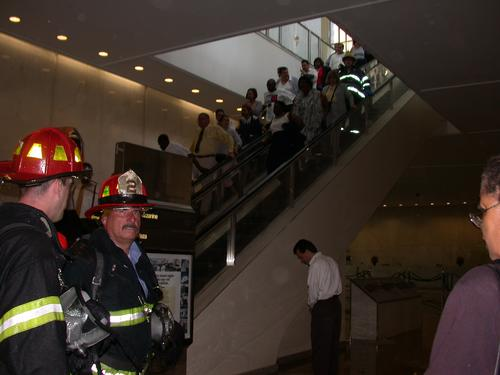
Clark & Praimnath assured the guard that they will call the medics as soon as they get access to a working public phone. Again on the 31st Floor, they discovered an open conference room of Oppenheimer Management Corporation which had working phones. They each called home - Praimnath left a message over the voicemail & Clark briefly talked to his wife telling her that he is safe. Then Clark called 911 informing about the injured man & guard on the 44th Floor SkyLobby. After the call, they continued their journey to the lobby.
On the higher floors, A group of people from Aon Corporation consisting of Keating Crown, Kelly Reyher & Donna Spera was on their journey towards the lobby from the 78th Floor SkyLobby where had encountered silent ground, fallen bodies of people who were standing there a few moments before the jetliner slammed the building.
When the jetliner slammed the building, the group was in the elevator that they had taken from the 93rd Floor to reach the 78th. The elevator was burning & was about to collapse due to the power failure. Reyher used his briefcase to wedge apart the elevator doors rescuing Crown & Spera. Both were had severe burns due to the impact with the latter damaging her multiple bones.

The group managed to stumble to Stairwell A located at the northwest corner of the lobby. A few others who were left alive in the lobby followed them towards the Stairwell A. Crown wanted to carry Spera on her back in the stairwell, but Reyher dismissed the idea as they had 77 floors to go.
Spera slung her arms over Crown & Reyher, & they began to go down. Very soon, they encountered the same man & woman who had a brief encounter with Fern - who reported that the stairwell was blocked.
The temporary solution that was made by Fern had collapsed due to the crashing of the same elevator car that held the group from Aon. With Reyher & Crown could see the struts that once held the wallboard & also the conduit that was running in the shaft. Seeing the state of debris, there were discussions to go back upstairs but the group didn't want to turn back after seeing the horrors upstairs & decided to clear the debris & make a passageway for them to pass.
Crown & Reyher began to pick up junk from the floor & began to place the wallboard back into its place but it quickly fell back onto the stairs. Then Crown realized that the wallboard can be rested on the conduit, which would make the passageway secure & still leave space. A third man who followed them from the 78th floor helped them to lift the board & cleared the passageway leaving them enough room to pass-through
After passing through the obstacles on the 76th Floor, Crown traveled with a woman for a few flights thinking it is Donna Spera, before suddenly realizing it was someone else. Another man stepped in to walk with that woman. Crown continued to walk down on his own with his broken leg & bleeding head & arm injuries. Another man who was a few stairs behind Crown took off his shirt, soaked it in water & wrapped it around Crown's wrist. As he caught up with people from the lower floors, the word was passed ahead that an injured person was coming & the double line of evacuation quickly folded into a single line. On his way down, A woman offered Crown a can of Diet Pepsi. Crown thanked the woman & continued down. He reached the lobby & a paramedical team treated his injuries.

A few flights behind Crown, Reyeher & Spera were making steady progress. Spera wanted to rest but Reyher gave her no quarter to rest & insisted to keep going on. After reaching the lobby, Spera & Reyher were given medical attention by the paramedics with the former was lifted by a US Marshall Dominic Guadagnoli
Meanwhile, Clark & Praimnath had reached the lobby at 9:55 AM where the rescue workers suggested they exit via Liberty Street running two blocks away from the complex. After reaching a safe spot, Praimnath told Clark that the towers might collapse but the latter was skeptical & believed that the towers will withstand. Just as Clark finished speaking, the South Tower began to collapse.
As the dust cloud from the collapsing South Tower approached them, they ran south and entered 42 Broadway as the wave caught up to them. Inside that lobby, they exchanged business cards. Clark made his way home to New Jersey whereas Praimnath went to the hospital for his injuries. Later on that evening, after midnight, when Praimnath had finally gotten home from the hospital, he called Clark to find out what had happened to him.

Just two minutes before the collapse of the South Tower, DiFrancesco made it out to the building but was caught up in the collapse & dust cloud. He survived as he woke up several days later at a hospital where he was treated for extensive burns & head laceration.
The final blow came at 10:28 AM when the North Tower collapsed trapping many emergency services personnel & tenants. The Collapse had not only changed the United States but also the World forever...
Impact of 9/11
9/11 changed not only changed the perspective of terrorism but also impacted the psychological thinking & everyday life of many Americans.
The closure of the American Airspace was ordered by Vice President Dick Cheney with the order of every civilian airliner to be landed at the nearest airport. International Flights were asked to return to their country of origin or were asked to land in Canada or Mexico banning their entry for 3 days
The Economy of the United States was badly hit with the closure of Wall Street with the Aviation Sector taking a major hit as citizens began to lose faith & paranoia associated with jetliners & 9/11.
The attacks are the deadliest in history with the fatalities given below :
2,192 WTC Civilians
343 FDNY Officers
23 NYPD Officers
37 PAPD Officers
125 Pentagon Employees
256 Passengers & Crew aboard the ill-fated jetliners

The Attacks also contributed to many health issues as a result of toxic dust containing asbestos, mercury, lead in the air surrounding Ground Zero affecting 10,000 victims & first responders with long-term diseases & 2,000 fatalities due to these diseases.
The United States went on to create the Department of Homeland Security was created by with Homeland Security Act, 2002 to coordinate domestic anti-terrorism efforts which was further strengthened with American Patriot Act.
In terms of aviation safety, Federal Aviation Administration (FAA) ordered airlines to reinforce airplane cockpits to be reinforced to prevent anyone to gain access to the cockpit with enforcement of sky marshals & introduction of the Aviation and Transportation Security Act which created the Transportation Security Administration (TSA) to inspect passengers and luggage, causing long delays and concern over passenger privacy.
The United States would go on to wage the War of Terror to depose the extremist regime in Afghanistan & trace the World's Most Wanted Terrorist, who would be traced & killed in Abbottabad, Pakistan by US Navy Seals under the Operation Neptune Spear on 2nd May 2011, Almost 9 years after 9/11...
It might have been two decades post 9/11 but the after-effects of it still reel & affect every aspect of any individual's life & safety who lived through or was born after that fateful day...
Bibliography
The content of the following blog couldn't be done without the help of the following resources & reports :
The Book : 102 Minutes - The Definitive Account of the Fight to Survive Inside the Twin Towers by Jim Dwyer & Kevin Flynn
Excerpts from the Final Report of 9/11 Commission|
Excerpts from the New York Times ( NYT )
Excerpts from Wikipedia
Excerpts from History.com
Credit for the Images to their respective owners in respect with Copyright & Fair Use Policy

Great job Aarya.........Wonderful👌🏻👌🏻👍🏼👍🏼
Fantastic Arya!! I wanna see more of your contents!!! Osum!!👍🏻👍🏻👏👏👏👏👏